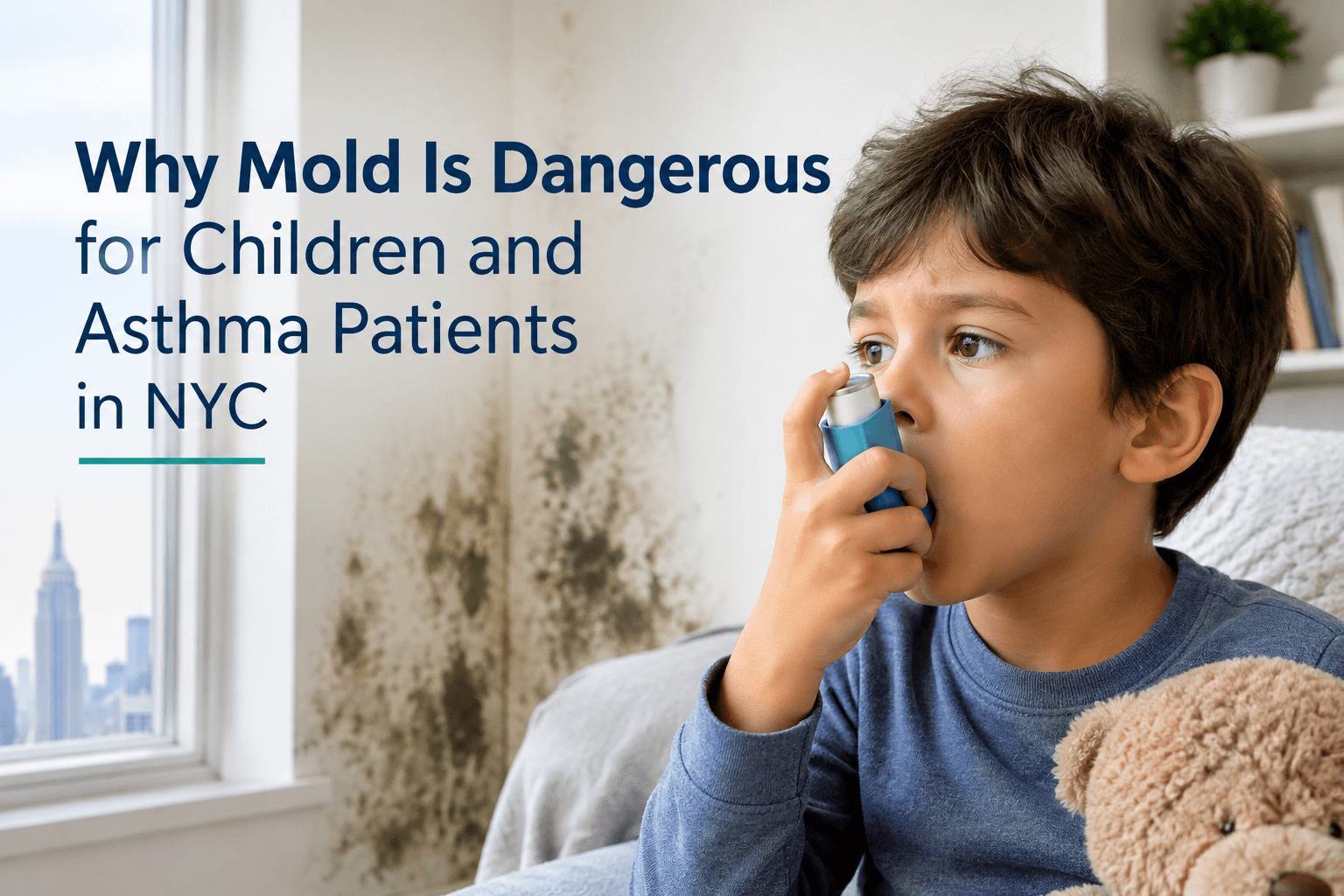
Mold is a common problem in New York City buildings, especially in apartments with poor ventilation, water leaks, plumbing issues, and excess moisture. While mold can affect anyone, children and people with asthma are particularly vulnerable to its effects. For NYC property owners and landlords, addressing mold problems quickly is essential to maintaining a safe and healthy living environment.
How Mold Affects Children
Children are more sensitive to indoor air pollutants because their lungs are still developing. Exposure to mold can cause symptoms such as coughing, sneezing, nasal congestion, skin irritation, and eye discomfort. Prolonged exposure to damp and moldy environments may also increase the risk of developing respiratory symptoms and asthma.
Parents should watch for recurring allergy-like symptoms, particularly when children spend time inside an apartment with visible mold or a persistent musty odor.
Why Mold Is Risky for Asthma Patients
For individuals with asthma, mold exposure can trigger symptoms or worsen existing respiratory conditions. Mold spores and other particles in damp indoor environments may contribute to:
Wheezing and shortness of breath
Persistent coughing and chest tightness
Increased asthma attacks
Worsening allergy symptoms and respiratory irritation
People with asthma should avoid disturbing visible mold themselves, as this can release additional particles into the air.
Common Causes of Mold in NYC Apartments
Mold typically develops where moisture remains for extended periods. Common causes in NYC buildings include leaking roofs, damaged plumbing, bathroom condensation, basement flooding, poor ventilation, and water intrusion through walls or windows.
Simply cleaning visible mold may not solve the problem. The underlying moisture source must also be identified and corrected to help prevent mold from returning.
What NYC Property Owners and Landlords Should Do
Property owners should investigate water leaks and moisture problems promptly, arrange appropriate mold assessments when necessary, and ensure that affected areas are properly remediated. Cleaning or painting over mold without addressing the source of moisture can allow the problem to return.
NYC landlords must also understand their applicable housing and mold-related obligations. Depending on the building and the extent of the problem, specific inspection, remediation, and documentation requirements may apply.
Protect Your Property and Your Tenants
Mold is more than an appearance issue—it can affect indoor air quality and create serious concerns for vulnerable residents. Early detection, proper moisture control, and professional remediation can help reduce exposure risks and prevent further property damage.
If you suspect mold in your NYC property, Environmental Safeguard Solutions can help you understand your environmental inspection needs and identify appropriate next steps toward a safer indoor environment.