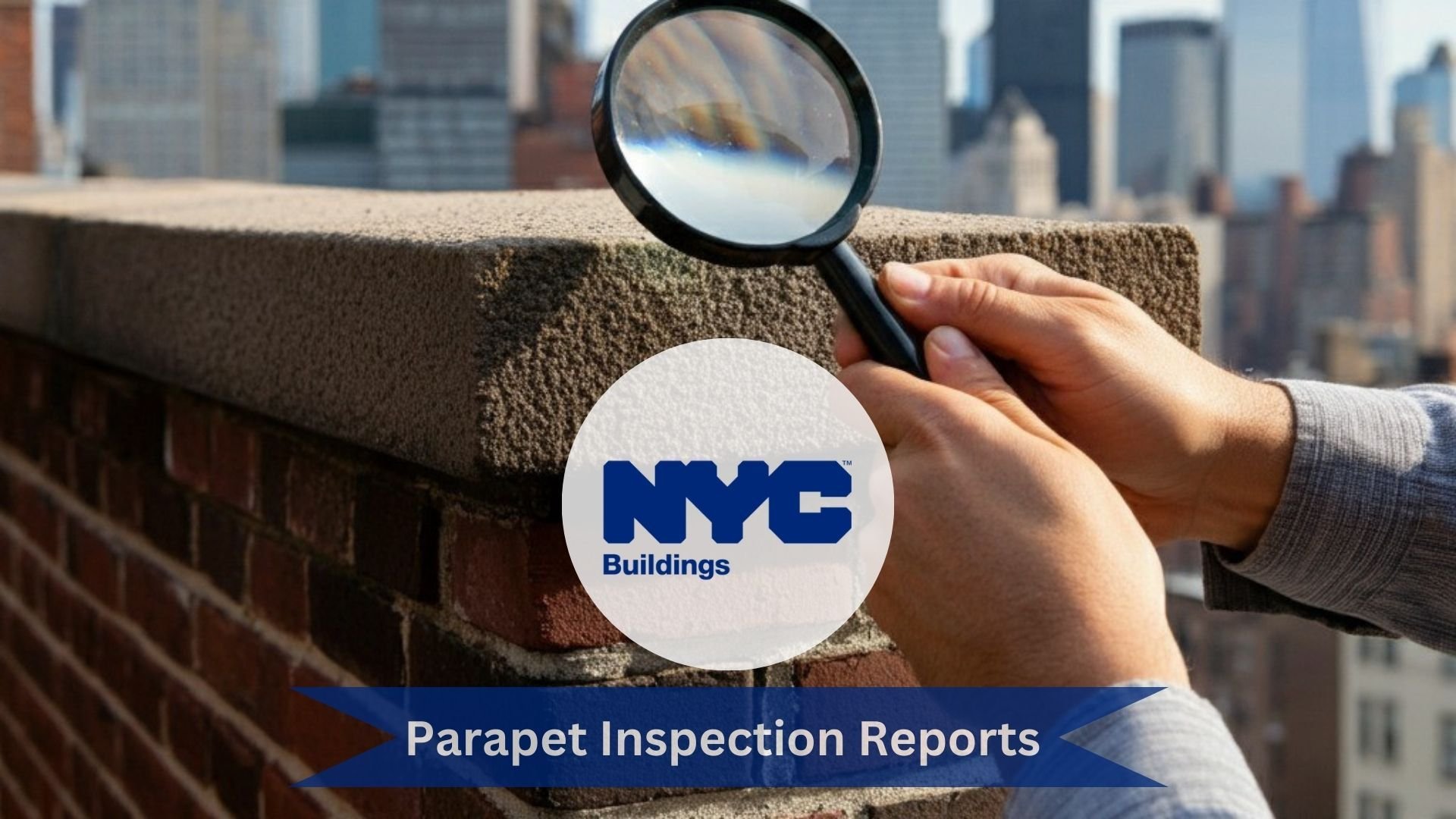
Parapet walls are an important part of building safety in New York City. Because parapets are exposed to weather, temperature changes, and other environmental conditions, they can develop defects that may create safety concerns. Regular inspections help property owners identify problems before they become more serious.
Under NYC Local Law 126, applicable buildings are subject to periodic parapet inspections and reporting requirements. Understanding what inspectors look for can help owners prepare their properties and address potential issues early.
1. Cracks and Deteriorated Masonry
Inspectors examine the parapet for visible cracks, loose masonry, spalling, and other signs of deterioration. Cracks can allow water to enter the wall and contribute to further damage, particularly during New York's freeze-thaw cycles.
Loose or deteriorated bricks, blocks, stones, or mortar joints may also require repair.
2. Loose or Unstable Materials
Any masonry or other material that appears loose, displaced, or unstable receives particular attention. These conditions can become dangerous if pieces fall from the parapet onto sidewalks, streets, or areas below.
Inspectors may document the location and severity of these conditions as part of the inspection report.
3. Copings and Caps
Parapet coping and caps help protect the top of the wall from water penetration. Inspectors look for cracked, displaced, deteriorated, or improperly secured coping materials.
Damaged coping can allow water to enter the parapet and accelerate deterioration.
4. Flashing and Waterproofing
Inspectors examine visible flashing, waterproofing components, and joints around the parapet. Failed or deteriorated waterproofing can allow moisture into the wall assembly.
Signs of water infiltration, staining, efflorescence, or deterioration may indicate that repairs are necessary.
5. Mortar Joints
Deteriorated mortar joints are another common concern. Inspectors look for mortar that is cracked, missing, eroded, or otherwise failing.
Repointing may be necessary when mortar deterioration becomes significant.
6. Connections and Adjacent Building Elements
Inspectors also consider elements connected to or located near the parapet, such as railings, fences, signs, mechanical equipment, and other attachments.
These components should be properly secured and should not create additional hazards or contribute to parapet deterioration.
7. Signs of Water Damage
Water is one of the biggest contributors to masonry deterioration. Inspectors look for staining, efflorescence, damaged masonry, vegetation growth, and other indications that water may be entering the parapet.
Identifying the source of moisture is important because simply repairing visible damage may not solve the underlying problem.
8. Overall Stability and Safety
Ultimately, the inspector evaluates the parapet's overall condition and determines whether there are conditions that could present a safety concern.
If unsafe conditions are identified, the property owner may need to take corrective action within the timeframe required by NYC regulations. Depending on the severity of the condition, immediate protective measures or repairs may be necessary.
Preparing for a Parapet Inspection
Property owners can make the inspection process easier by addressing obvious maintenance problems beforehand, providing safe access to the parapet, and keeping previous inspection and repair documentation available.
Regular maintenance can also help reduce the likelihood of serious deterioration and unexpected repair costs.
Stay Ahead of NYC Parapet Requirements
A parapet inspection is more than simply checking whether a wall is standing. Inspectors evaluate masonry, coping, mortar joints, waterproofing, attachments, and other conditions that can affect the safety and durability of the building.
For NYC property owners, scheduling inspections early and addressing defects promptly can help maintain building safety and avoid compliance problems under Local Law 126.