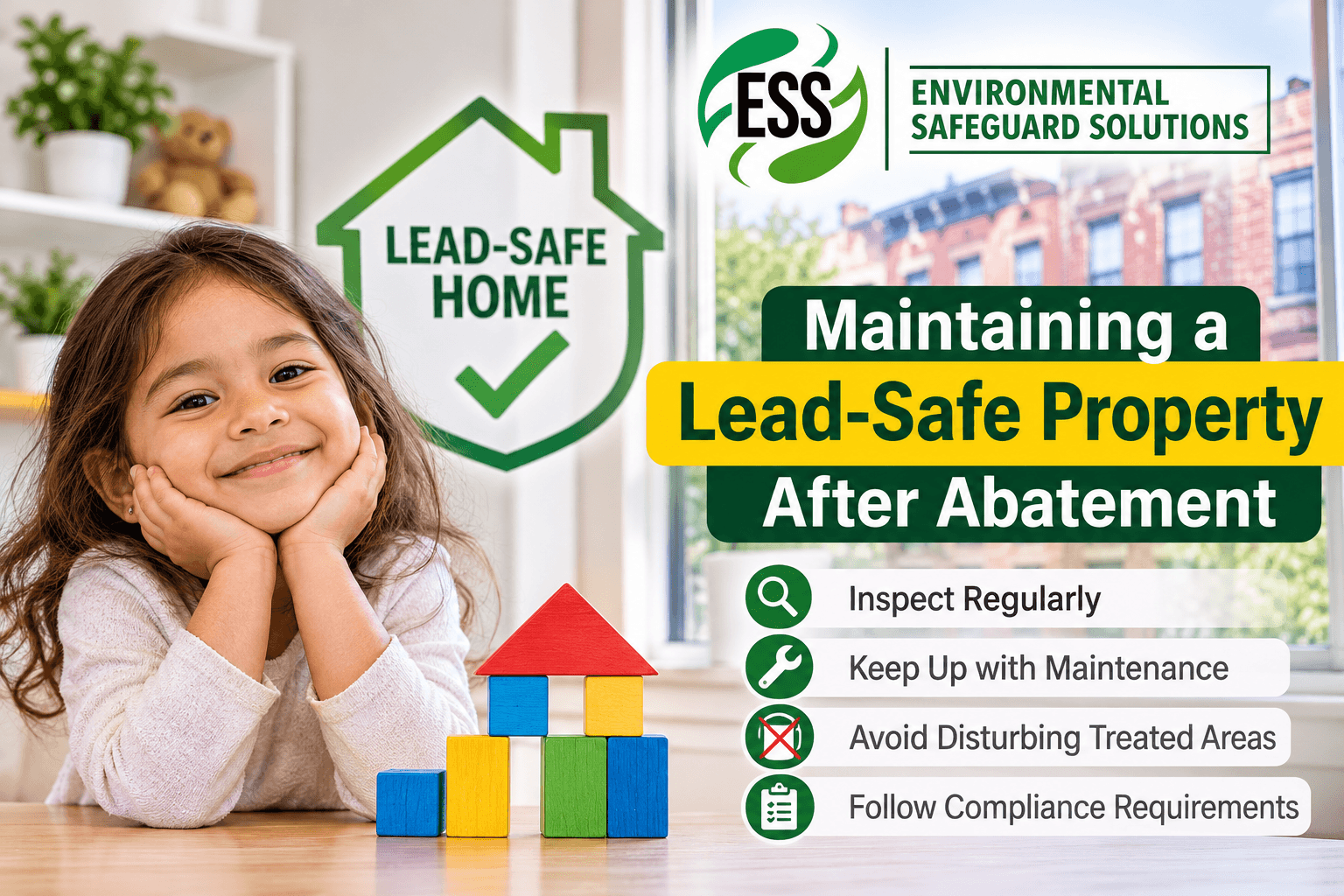
Completing lead abatement is an important step toward creating a safer living environment, but property owners should understand that maintaining a lead-safe property requires ongoing attention. Even after lead hazards have been addressed, regular maintenance, inspections, and proper property management are necessary to prevent future problems.
For New York City landlords and property managers, keeping properties lead-safe is especially important for protecting tenants and staying compliant with applicable housing regulations.
1. Perform Regular Property Inspections
After lead abatement, property owners should regularly inspect painted surfaces, windows, doors, walls, and other areas where lead-based paint may have been present. Look for peeling paint, cracks, chipping, or signs of deterioration that could create new hazards.
Addressing these issues early can help prevent further exposure.
2. Maintain Painted Surfaces
Damaged paint can become a source of lead dust, particularly in older buildings. Keep painted surfaces in good condition by repairing deteriorating areas using appropriate lead-safe work practices.
Avoid sanding, scraping, or disturbing painted surfaces without following proper safety procedures.
3. Keep the Property Clean
Regular cleaning helps reduce the accumulation of dust that may contain lead particles. Property owners and tenants should pay particular attention to windowsills, floors, and other surfaces where dust can collect.
Using appropriate cleaning methods can help maintain a healthier indoor environment.
4. Keep Inspection and Abatement Records
Maintaining proper documentation is an important part of long-term lead safety. Property owners should keep copies of lead inspection reports, abatement records, clearance testing results, and related maintenance documentation.
Organized records can help demonstrate compliance and provide useful information for future inspections or property transactions.
5. Stay Updated on NYC Lead Regulations
New York City has specific requirements regarding lead-based paint in residential properties. Landlords should stay informed about applicable Local Law 31 requirements, inspection schedules, and HPD regulations.
Understanding these requirements can help property owners avoid violations and maintain safer housing conditions.
Protect Your Property Beyond Abatement
Lead abatement is not the end of your responsibility as a property owner. Continued maintenance, regular inspections, and proper documentation are essential for keeping buildings lead-safe over time.
Environmental Safeguard Solutions helps property owners and managers address environmental inspection needs and lead-related compliance concerns. Taking a proactive approach after abatement helps protect occupants, preserve property conditions, and support long-term compliance.