Mold violations in New York City are regulated by the Department of Housing Preservation and Development (HPD), which classifies them into three categories: Class A, Class B, and Class C. These classifications determine the severity of the violation, the timeline for remediation, and whether compliance must be reported to the Department of Environmental Protection (DEP). Property owners and managers must understand these distinctions to ensure timely and proper remediation while avoiding penalties.
Classifications of HPD Mold Violations
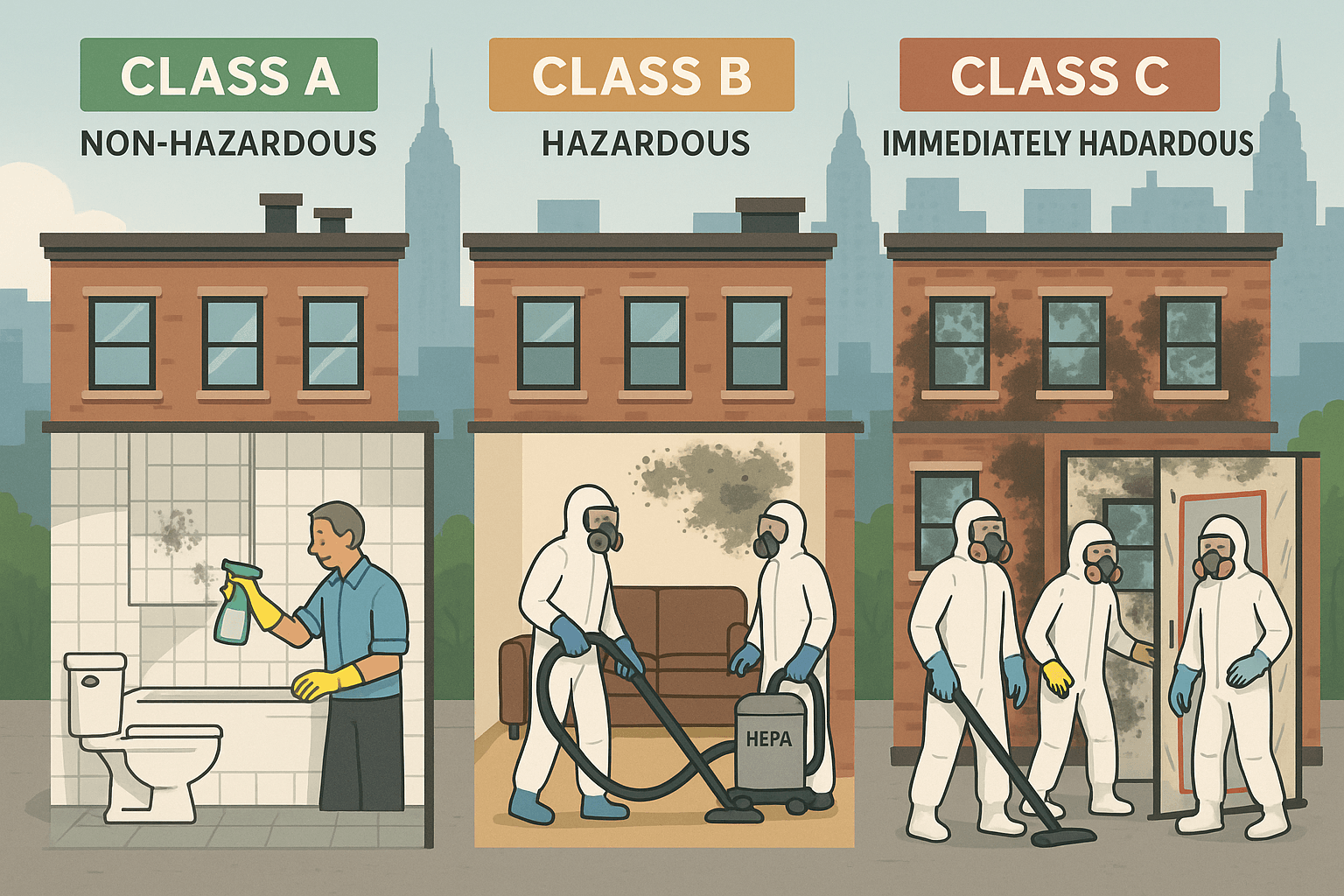
Class A Violations – Non-Hazardous
Class A violations refer to minor mold issues that do not pose an immediate risk to health or safety. These are typically small mold growths (under 10 square feet per room) that can be addressed with routine cleaning and maintenance. Property owners are generally given 30 days to correct Class A violations.
Remediation:
- Cleaning affected areas with mold-killing solutions (e.g., diluted bleach or commercial mold removers)
- Addressing moisture sources (e.g., leaky pipes, poor ventilation)
- Improving airflow with dehumidifiers and exhaust fans
Filing Requirement: Class A violations do not require compliance filing with DEP.
Class B Violations – Hazardous
Class B violations are considered hazardous and involve more extensive mold growth, typically exceeding 10 square feet in a single room. These violations require remediation within 30 days and a more structured approach to prevent recurrence.
Remediation:
- Using HEPA vacuums and air scrubbers to remove mold spores
- Removing and replacing contaminated materials (e.g., drywall, insulation)
- Fixing underlying moisture problems, such as roof leaks or faulty plumbing
Filing Requirement: Class B violations do not require compliance filing with DEP unless they exceed specific thresholds outlined by the NYC Local Law 55 of 2018.
Class C Violations – Immediately Hazardous
Class C violations are the most severe, representing conditions that pose an immediate threat to the health and safety of occupants. This includes mold growth covering large areas (greater than 30 square feet) and cases where mold is affecting multiple rooms or units. Property owners must remediate Class C violations within 24 hours to 21 days, depending on the severity and urgency determined by HPD.
Remediation:
- Hiring a licensed mold assessor to conduct an inspection and develop a remediation plan
- Engaging a licensed mold remediation contractor to perform abatement following New York State guidelines
- Using containment barriers to prevent mold spores from spreading
- Conducting post-remediation clearance testing to confirm successful removal
Filing Requirement: Class C violations must be filed with DEP under the New York State Mold Law, which mandates reporting for projects exceeding 10 square feet in residential buildings.
Steps to Resolve an HPD Mold Violation
- Assessment: Identify the extent of mold contamination and underlying moisture sources.
- Remediation: Choose the appropriate method based on violation class (DIY for minor cases, professional services for severe cases).
- Post-Remediation Verification: Conduct clearance testing if required.
- Certification and Filing: If applicable, submit compliance documentation to HPD and DEP.
Conclusion
Understanding HPD mold violations and their classifications ensures timely remediation and compliance with NYC regulations. While minor mold issues (Class A & B) can often be managed through routine maintenance, severe cases (Class C) require professional intervention and DEP filing. Property owners should take a proactive approach by maintaining proper ventilation, addressing moisture problems, and conducting regular inspections to prevent mold violations and protect tenant health.